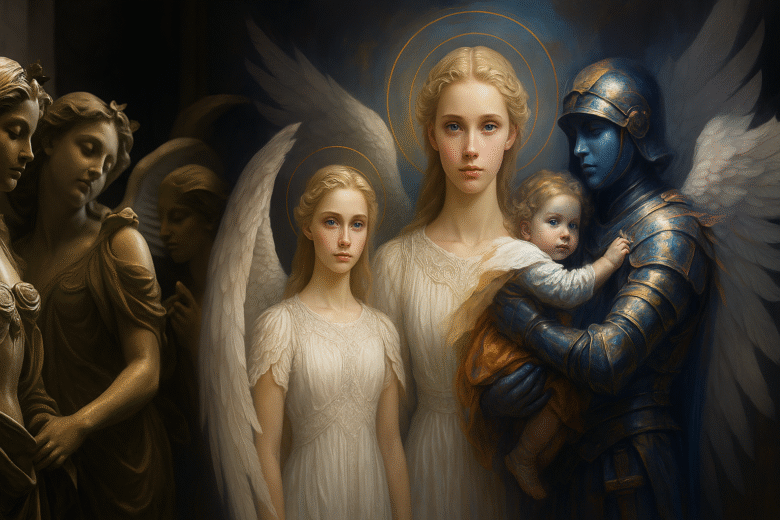
The First Spark
My first AI experiment didn’t involve words—it involved wonder. The prompt was simple: “archangel protecting child, abstract.”
I didn’t think about lighting, composition, or aspect ratio. I didn’t know what “stylize” or “version” meant. I just wanted to see what would happen when I gave an idea to a machine. And then, in less than a minute, I saw it: a radiant figure in armor cradling a child, wings spread like a shield. It was raw, emotional, and strangely human.
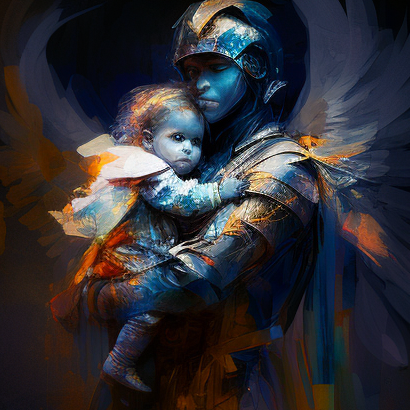
That image stopped me. It wasn’t just what I typed—it was what I meant. AI hadn’t just illustrated a sentence; it had translated a feeling. At that moment, I realized something powerful: the better you express what’s in your head, the better AI can show you what’s possible.
Learning the Language of Images
After that first success, curiosity took over. I began experimenting with different ways to talk to Midjourney—adding style cues, specifying lighting, trying camera angles, changing mood, and color. Each word changed the result. Each variation taught me something new about how precise language shapes creative output.
My early images were emotional but chaotic. Later ones—like the serene angel in a wheat field and the sculpted stone figures—showed refinement and balance. The difference wasn’t luck; it was learning how to speak AI. Prompting, I discovered, isn’t a technical trick. It’s a conversation—one where clarity, tone, and intent matter more than vocabulary.
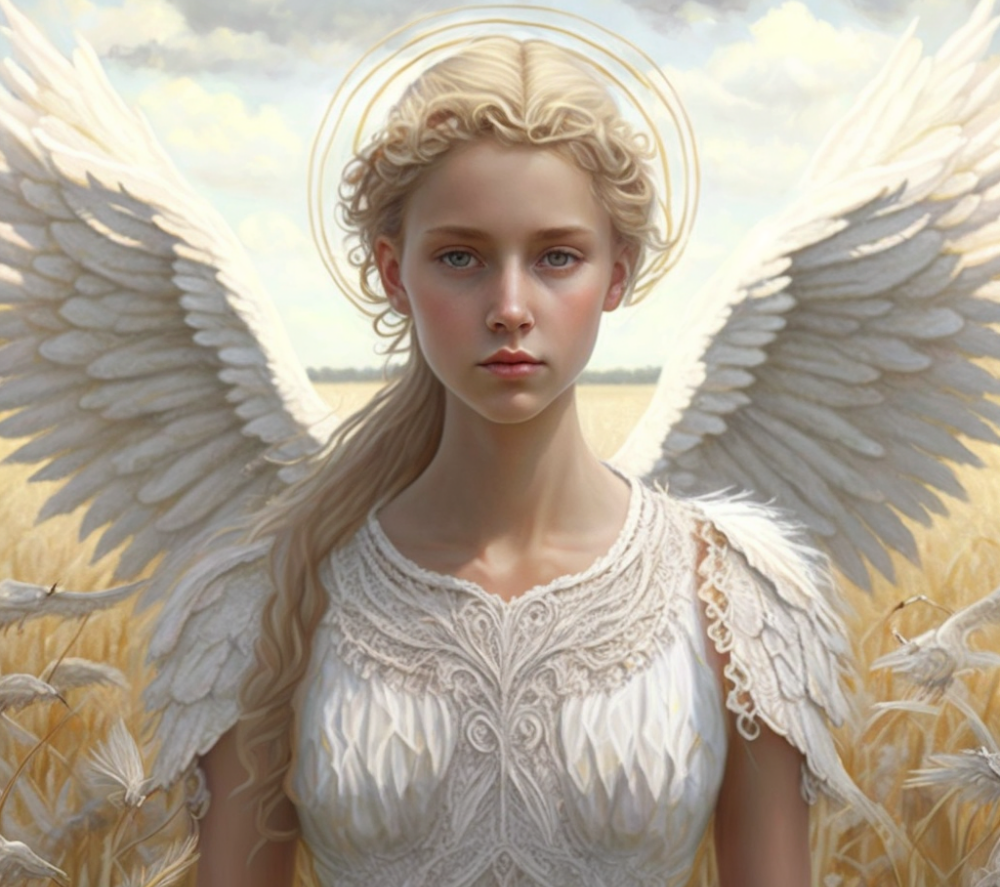
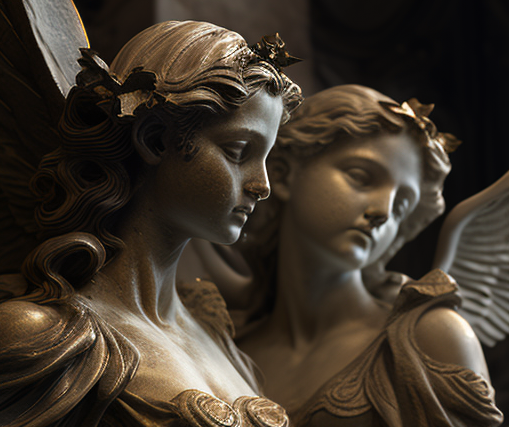
When I stopped trying to sound “artistic” and started describing what I actually wanted, everything clicked.
What Prompting Taught Me About Communication
It turns out prompting isn’t just for image generation. The same principles apply whether you’re using ChatGPT, Claude, Gemini, or any other AI assistant. Be clear about what you want.
- Provide context so the AI understands your intent.
- Don’t expect perfection—expect iteration.
- Treat the process as collaboration, not command.
- The magic isn’t in the tool—it’s in your words.
Every prompt is a mirror of your own thinking. If your ideas are fuzzy, the output will be, too. But when you take the time to define your goal and describe it well, the result often surprises you—in the best way.
From Visuals to Words
Eventually, my creative experiments with Midjourney led me to another realization: I wanted to explain the stories behind my images. That’s when I discovered ChatGPT. Midjourney painted the pictures; ChatGPT helped me narrate them. Together, they turned curiosity into creativity—one drawing it, the other describing it. And in that partnership, I found a new way to think, plan, and express ideas.
The Real Lesson
Looking back, that first Midjourney image wasn’t about angels at all. It was about communication. It reminded me that prompting is simply the modern form of clear thinking—a bridge between imagination and expression.
If you’re new to AI tools, don’t worry about mastering every platform. Start with curiosity. Learn how to describe your ideas. Experiment with your words until they paint the picture—or write the paragraph—you’re looking for. Because whether it’s Midjourney, ChatGPT, Claude, Gemini, or whatever comes next, the same rule applies:
“The better you communicate, the better AI collaborates.”
Prompting isn’t technical; it’s linguistic art. You’re teaching AI your imagination one word at a time.
Closing Thought
My first AI image—a luminous archangel shielding a child—reminds me how far a single sentence can take you. That prompt didn’t just create an image; it started a journey.
#MyAIRobotFriend #Prompting #AIArt #ChatGPT #Claude #Gemini #AIEducation #Creativity