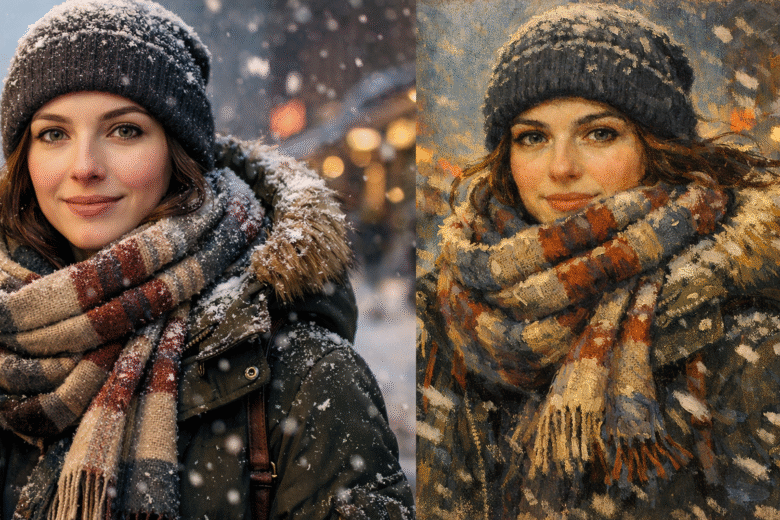
Let me start with a confession.
I’ve created numerous AI-generated images that were technically impressive… yet emotionally empty. Sharp. Polished. Perfect. And somehow lifeless. You know the kind. You look at them and think, “Wow.” And then you immediately forget them.
At some point, it clicked: the problem wasn’t the AI. It was what I was asking it to do.
Most prompts accidentally tell AI to show off. Bigger, sharper, prettier, more dramatic. That’s great if you’re trying to win a demo contest. It’s not ideal if you’re trying to create something that feels like it belongs on a wall rather than a screen.
So I started changing my approach.
Instead of asking AI to make things “better,” I asked it to make things truer.
Instead of pushing for perfection, I leaned into restraint.
Instead of chasing realism, I aimed for artwork.
Here are a few small shifts that made a big difference for me:
- I stopped asking AI to “enhance” faces and focused on preserving likeness
- I told it to match hair length and texture from the reference image instead of inventing something cooler
- I softened edges instead of sharpening them
- I explicitly asked it to avoid that glossy, plastic AI look
- I let atmosphere—light, weather, mood—do more of the heavy lifting
What surprised me most was this: the images got better when I asked for less.
That’s when AI images stopped looking like AI images and started looking like artwork. Not perfect. Not symmetrical. Not trying to impress anyone. Just human enough to feel intentional.
If you’re experimenting with AI visuals, here’s the friendly advice I wish someone had given me sooner: Don’t try to make AI look amazing. Try to make it look considered. That’s usually where the magic sneaks in.
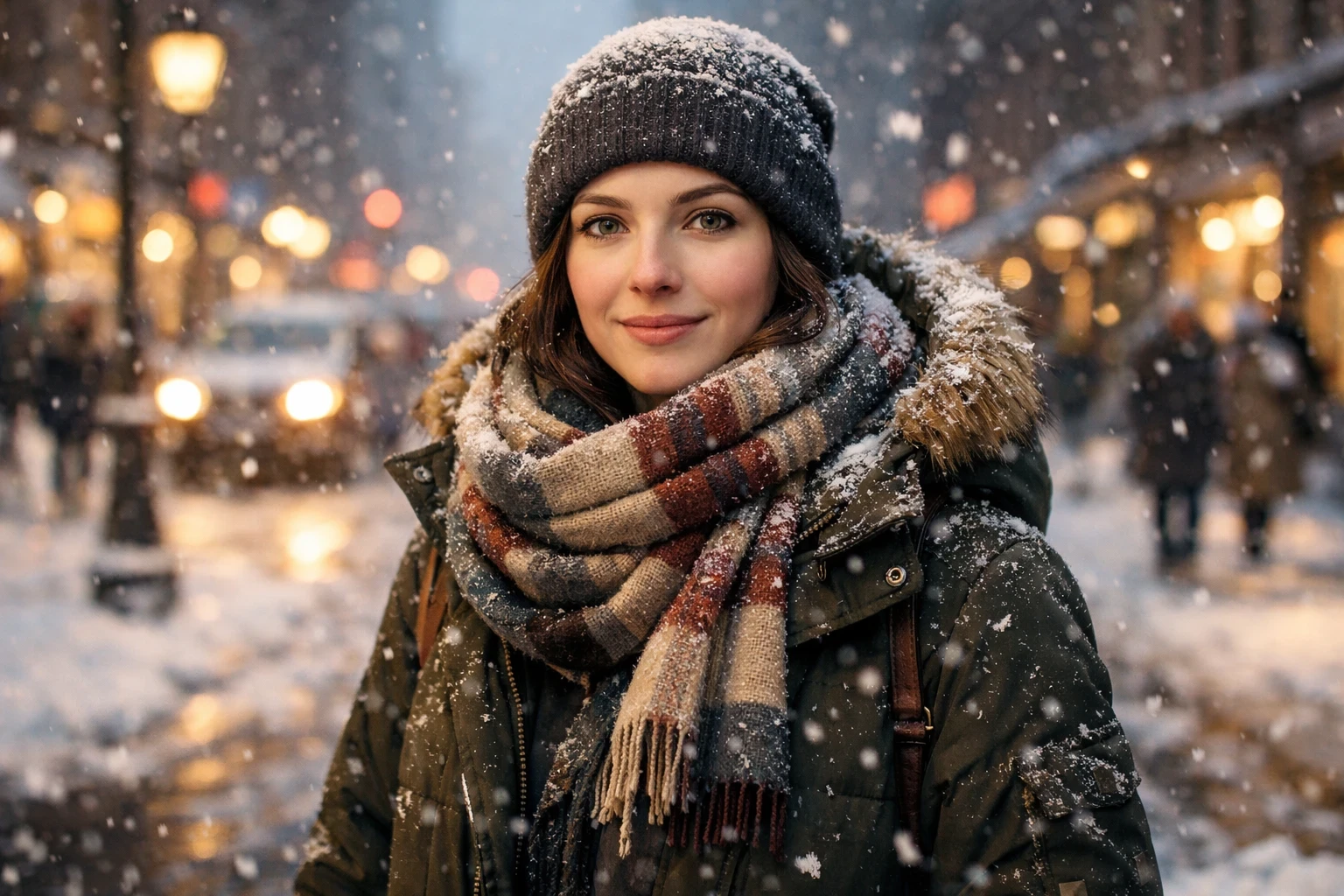
Prompt Rendered ChatGPT: Create a beautiful portrait of a person standing in a snowy city street. Winter clothing, scarf, snow falling, cinematic lighting. Highly detailed, sharp focus, realistic face. Landscape image.
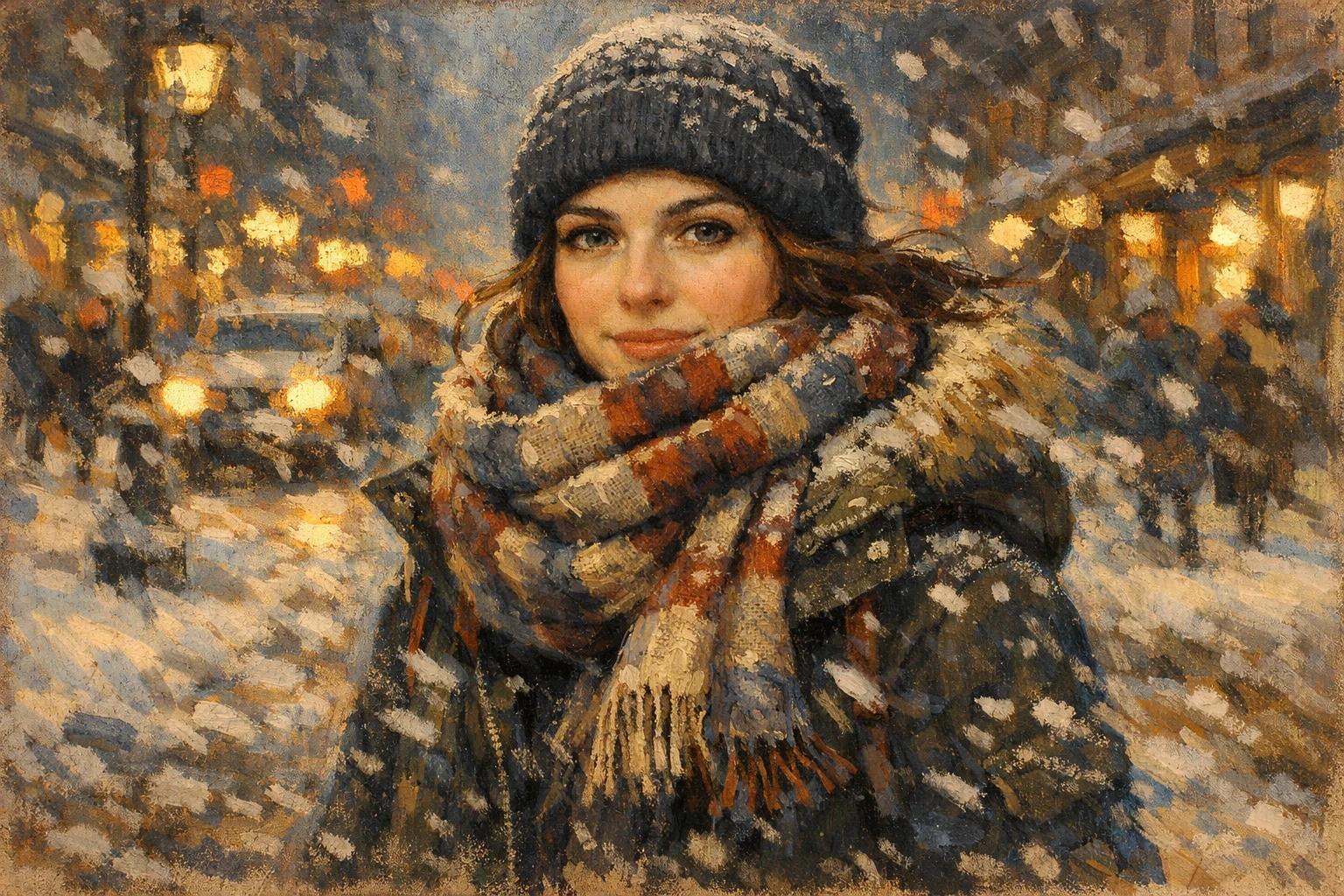
Artwork Prompt Render ChatGPT: Transform the uploaded reference image into a modern Toulouse-Lautrec inspired fine art illustration. Preserve the subject’s facial structure, proportions, and natural expression. Match hair length, texture, and volume exactly from the uploaded photo, adjusted only by wind. Subject stands on a snowy urban street at dusk. Body turned slightly to the left, eyes focused directly at the viewer. Thick winter scarf wrapped high, partially covering the lower face. A subtle, natural smile is barely visible. Wind blows loose strands of hair. Heavy snow swirls through the scene. Painterly brushwork, softened facial edges. Organic skin texture with natural imperfections. Muted winter palette with warm city light accents. Imperfect, human, hand-painted feel. Avoid photorealism. Avoid hyper-sharp facial features. Avoid AI gloss. Landscape canvas, gallery-quality fine art.
#MyAIRobotFriend #AIArt #CreativeAI #PromptTips #AIImages #GenerativeArt